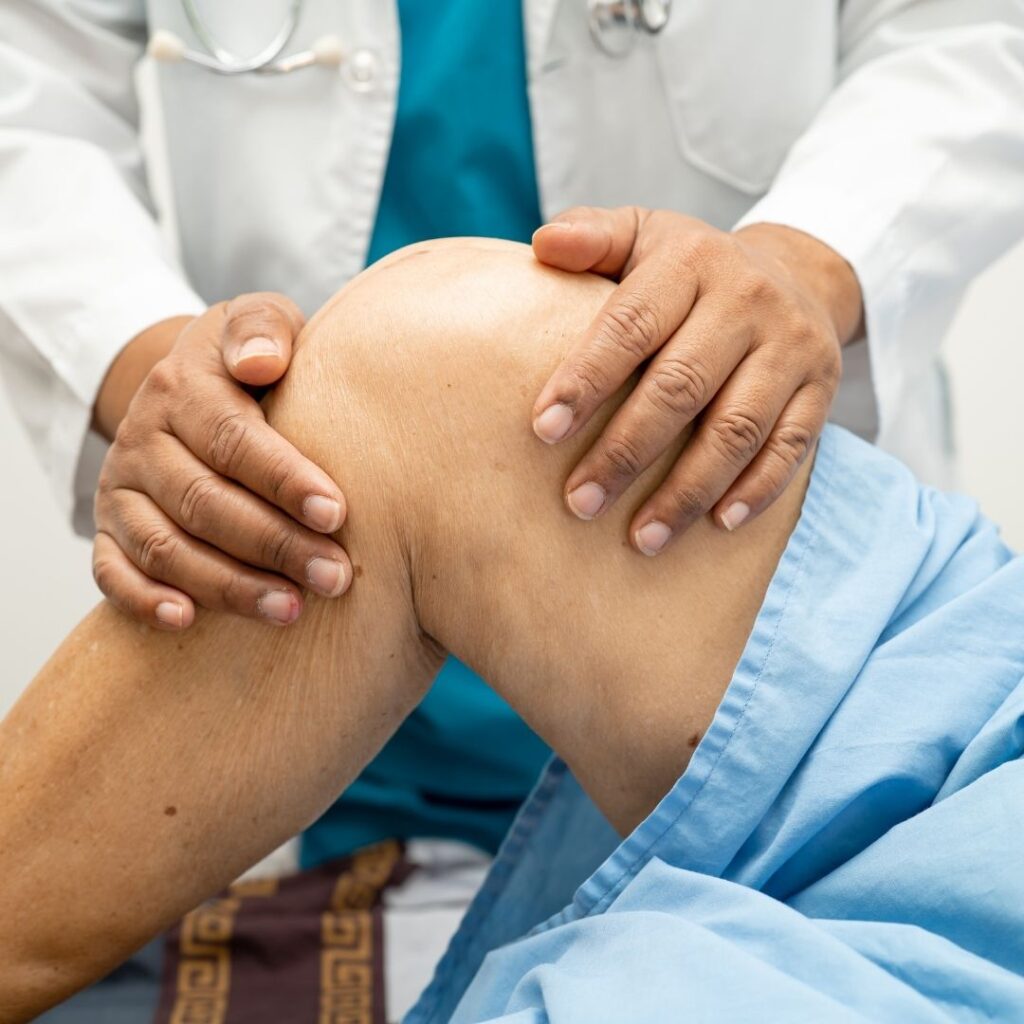
A meniscus tear can change how the knee moves, bends, and bears weight. This injury often causes pain, swelling, catching, or a feeling that the knee might give way. Some tears happen suddenly. Others develop slowly over time.
At Austin Orthopedic Institute, meniscus injuries are evaluated by an orthopedic knee specialist who looks at how the joint moves as a whole. Care plans may include activity changes, physical therapy, or orthopedic knee surgery when damage limits motion or causes ongoing pain. For patients seeking knee surgery in Austin, our team focuses on clear diagnosis and steady recovery.
What the Meniscus Does Inside the Knee
The meniscus is a crescent-shaped piece of cartilage that sits between the thigh bone and shin bone. Each knee has two menisci. They act as shock absorbers and help spread force across the joint during walking, bending, and turning.
When the meniscus is damaged, pressure shifts unevenly through the knee. That imbalance can cause pain and interfere with smooth movement. Protecting this cartilage plays a key role in long-term joint health and is a major focus for any knee surgeon evaluating injury or wear.
Types of Meniscus Tears
Radial Tear
A radial tear forms perpendicular to the curve of the meniscus, often near its inner portion where blood supply is limited. This type of tear can interfere with how the meniscus distributes weight across the knee joint. Even small radial tears may reduce the meniscus’s ability to absorb force, which can lead to pain during walking or standing.
Horizontal Tear
A horizontal tear splits the meniscus into upper and lower sections and often develops gradually rather than from a single injury. This pattern is commonly associated with cartilage wear and repeated stress on the knee. Fluid may collect within the tear, causing swelling and discomfort during activity. Symptoms often increase with bending, squatting, or prolonged standing.
Flap Tear
A flap tear occurs when a piece of the meniscus becomes partially detached. This loose fragment can shift during movement, leading to sharp pain, catching, or a sudden change in knee motion. Symptoms may feel unpredictable, with discomfort appearing during specific movements rather than constant pain.
Bucket Handle Tear
A bucket handle tear is a larger tear in which a portion of the meniscus folds inward toward the center of the knee joint. This displaced tissue can block normal movement, causing the knee to lock or lose the ability to fully straighten. Swelling and instability are common, and symptoms often appear suddenly after injury.
How Meniscus Tears Occur
Meniscus tears can happen during sudden twisting or pivoting, especially during sports or physical work. They can also develop gradually as cartilage weakens with age and repeated stress.
Common causes include:
Quick turns or stops
Deep squatting or kneeling
Lifting with the knee bent and rotated
Long-term joint wear
Some tears occur alongside ligament injuries. Others appear without a clear moment of injury. An orthopedic knee specialist evaluates movement patterns and imaging to determine the source.
A meniscus tear can change how forces move through the knee joint. Over time, this uneven pressure may contribute to cartilage breakdown and joint pain. Untreated tears can raise the risk of further injury or post-traumatic osteoarthritis.
When orthopedic knee surgery is appropriate, the goal is to preserve as much healthy tissue as possible while improving movement and stability. Decisions are guided by tear type, activity level, and joint condition. A knee surgeon may recommend repair or partial removal depending on these factors.
The surgeons at Austin Orthopedic Institute have treated thousands of knee injuries and conditions. They specialize in a patient-first approach, utilizing the latest techniques, including robotic-assisted surgery, to ensure precision and personalized outcomes.
Common Knee Pain Treatment Available at All Locations
Austin | Marble Falls | Georgetown | Killeen
Our experienced orthopedic providers at all Austin Orthopedic Institute locations can diagnose and treat many common knee and lower extremity conditions, including:
✓ Diagnostic Evaluation – Initial assessment and treatment planning for all knee and lower limb conditions.
✓ Surgical Planning – Comprehensive preoperative assessment and customized surgical mapping for patients requiring treatment.
✓ Joint Injections – Corticosteroid or viscosupplementation injections for pain and lubrication.
What to Expect at Your Appointment
Before Your Visit
We encourage you to take advantage of our complimentary MRI, X-ray, and CT scan review service. Send us your images, and one of our board-certified orthopedic surgeons will personally review them, offering an expert second opinion and letting you know if you need to come in.
During Your Visit
Conservative Care – We develop a personalized plan, with most patients starting with 6-12 weeks of non-surgical treatment.
Surgical Planning – If surgery is necessary, we use advanced computerized and robotic pre-operative planning for optimal, precise outcomes.
Recovery Support – We ensure close follow-up and coordinate your rehabilitation with our in-house physical therapy team for maximum recovery and a swift return to your active life.
Schedule Your Appointment Today
Don’t let chronic knee pain sideline your life any longer. At Austin Orthopedic Institute, we believe your injury is unique to you—and we treat it that way. Our expert, compassionate, and dedicated team is ready to diagnose your condition and develop a Personalized Treatment Plan that gets you moving again.
Why Choose Austin Orthopedic Institute for Knee Care?
✓ Robotic Knee Replacement Specialists – Access to cutting-edge technology (Mako® & AR) for superior precision
✓ 100% Fellowship-Trained Knee Surgeons – Advanced, subspecialty expertise you can trust
✓ Same-Day & Next-Day Appointments – When you’re in pain, we’re here to help quickly
✓ Over 130 Years of Combined Experience – Decades of proven orthopedic success in Central Texas
✓ Comprehensive Care, All Under One Roof – From initial diagnosis to surgery and in-house physical therapy
✓ Conservative Approach First – We exhaust non-surgical options before recommending surgery
✓ Four Convenient Locations – Austin, Marble Falls, Georgetown, and Killeen
✓ Complimentary Second Opinions – Free review of your existing MRI/X-ray/CT scans
Our Locations
Austin Orthopedic Institute has three locations – Austin, Georgetown, and Marble Falls. All of our providers go to the main office in Austin and our Georgetown location. Only Dr. Hurt visits our Marble Falls satellite location.
Important killeen location update
As of April 27, 2026, our Killeen location has closed, but your AOI team isn’t going anywhere. All of our providers have openings at our Austin and Georgetown offices and are ready to see you.