

Robotic Knee Replacement: Precision and Personalization at Austin Orthopedic Institute
Experiencing persistent knee pain can significantly impact your daily life. When non-surgical options no longer provide adequate relief, total knee replacement can be a transformative solution. At Austin Orthopedic Institute, Dr. Hurt utilizes advanced robotic assistance to enhance the precision and outcomes of knee replacement surgery. This innovative approach allows for highly accurate implant placement and personalized planning, ultimately aiming for a more natural-feeling and stable knee. This article will delve into why and how robotic technology is used to achieve these superior results.
Understanding Knee Replacement Basics and Why Precision Matters
A knee replacement involves resurfacing about eight millimeters of bone on both the femoral and tibial sides, not removing the entire end of the femur. The goal is to create precise, balanced, and rectangular “gaps”—both in extension (when the knee is straight) and flexion (when it’s bent). If these gaps are trapezoidal or unbalanced, even by just two or three millimeters, it can lead to instability, a limited range of motion, and discomfort. For instance, if too little bone is removed in extension, the knee won’t straighten, and just one millimeter of bone can equate to five degrees of extension. The robot allows Dr. Hurt to achieve this critical exactness.

Ligament Preservation for a More Natural Feel
Historically, if surgical cuts were imperfect, surgeons might release ligaments to make the implant fit. However, preserving these ligaments is crucial for an easier, faster recovery and a more natural-feeling knee. When ligaments are untouched, the knee maintains its natural anatomy and length, rather than being forced into a new, unfamiliar position. The robotic system provides Dr. Hurt with real-time data and measurements, allowing him to precisely plan and execute bone cuts that conform to your knee’s natural alignment and ligament tension. This helps avoid unnecessary ligament release and promotes a more normal outcome.
Advanced Pre-operative Planning with CT Scans
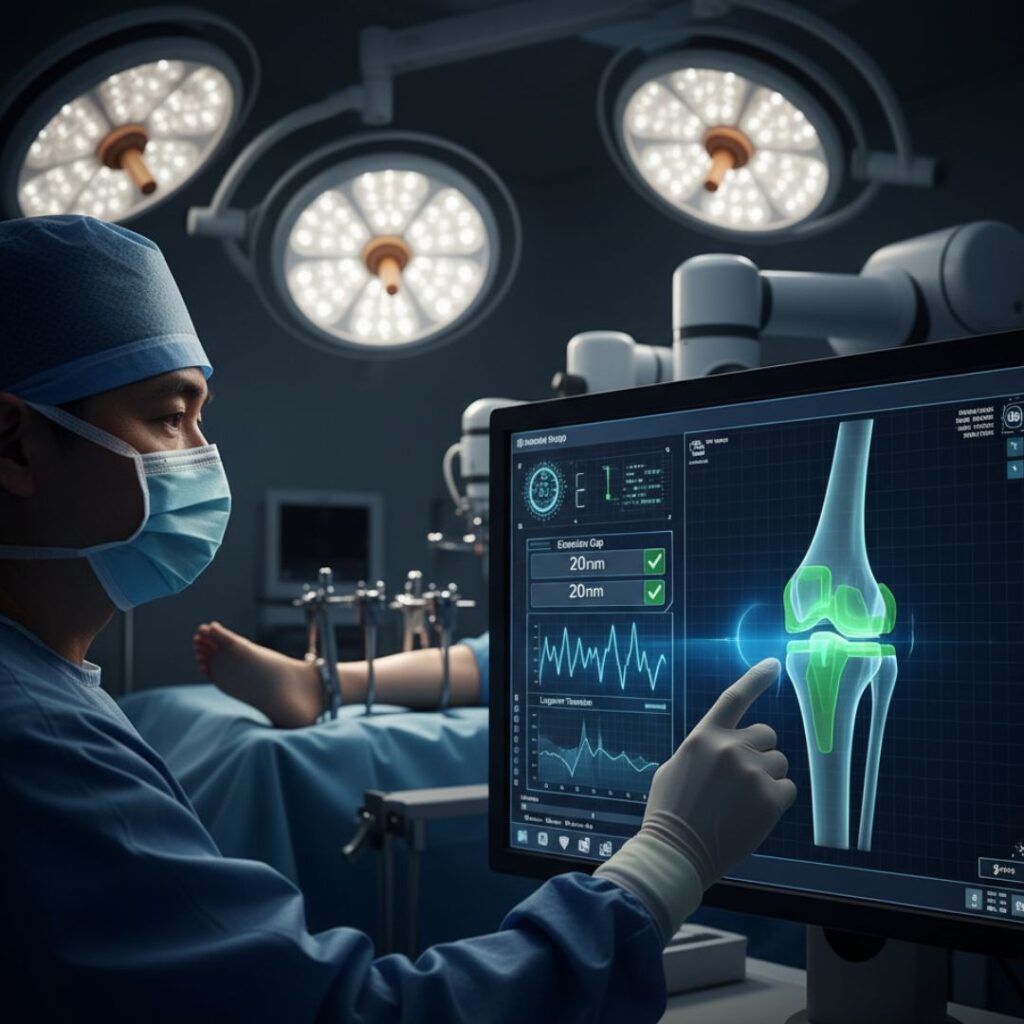
Before surgery, a detailed CT scan of the patient’s knee is taken. This isn’t just a generic scan; it provides a precise, patient-specific 3D model of your anatomy. In the operating room, Dr. Hurt uses this data to map and plan the surgery virtually on a computer screen. He can adjust implant positions and predicted cuts, observing in real-time how these changes affect the extension and flexion gaps. This meticulous planning allows for optimization of implant placement, rotation, and overall construct before any bone is actually cut. For instance, Dr. Hurt can ensure balanced gaps (e.g., 20mm and 20mm) in both flexion and extension, which is vital for post-operative comfort and function.
Implementing the Plan with Robotic Precision
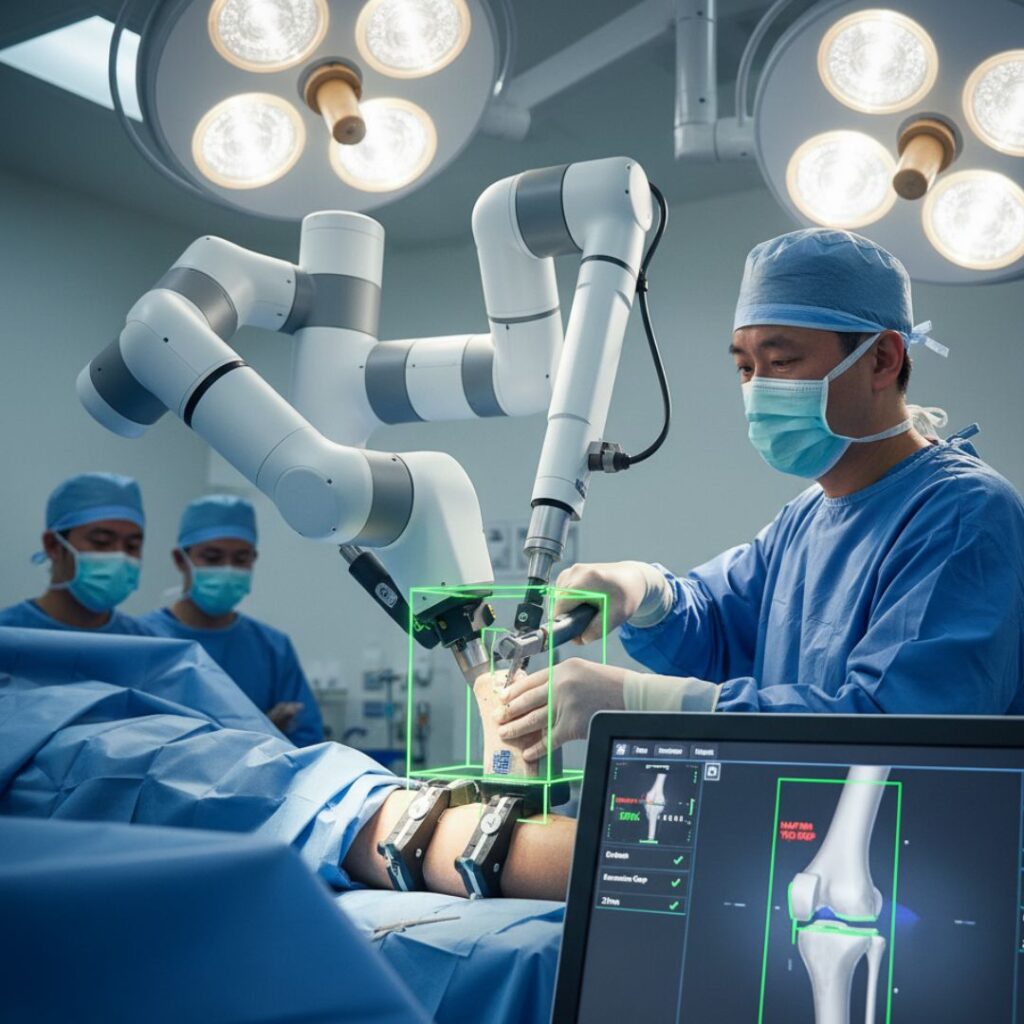
Once the personalized plan is finalized, the robotic arm is brought into position. It works by guiding the surgeon’s saw blade within predefined boundaries. While the surgeon still controls the back-and-forth motion of the saw, the robot ensures that the blade stays perfectly in plane and within the planned cutting area. This prevents accidental damage to vital structures like vessels and ligaments that lie outside the cutting zone. This incredible level of control and precision in execution directly translates to well-balanced gaps, leading to easier and faster recovery, and ultimately, happier patients with a knee that feels more normal.
Robotic-assisted knee replacement at Austin Orthopedic Institute represents a significant advancement in orthopedic care. By combining Dr. Hurt’s expertise with the robot’s ability to provide unparalleled precision and personalized planning, we strive to achieve optimal outcomes for our patients. This technology allows for the precise recreation of your knee’s natural mechanics, promoting stability, improved range of motion, and a more comfortable recovery. If you are considering knee replacement, we invite you to schedule a consultation with Dr. Hurt to discuss if robotic-assisted surgery is the right option for you. We are dedicated to helping you achieve a more active and pain-free life.